BMW's new "Predictive Engine Management" technology
BMW turns engineers loose to salvage free energy and harvest as much as possible power from a gallon of gasoline. A study by Automotive News says BMW is encouraging its engineers to search for high-tech ways to conserve energy.
BMW is already using technologies like stop-offset, regenerative brake system, electrical pumps and electric power steering, along with the infrequent eight-speed ZF transmission, to further improve the fuel efficiency of their vehicles.
Same outlet mentions that BMW is developing an intelligent engine control unit that uses the vehicle'southward navigation arrangement to more than efficiently regulate functions such as battery recharging and engine cooling. Tom Baloga, VP of Applied science for BMWNA, says the unit is called "predictive engine management" and it best works for drivers on regular daily commutes.
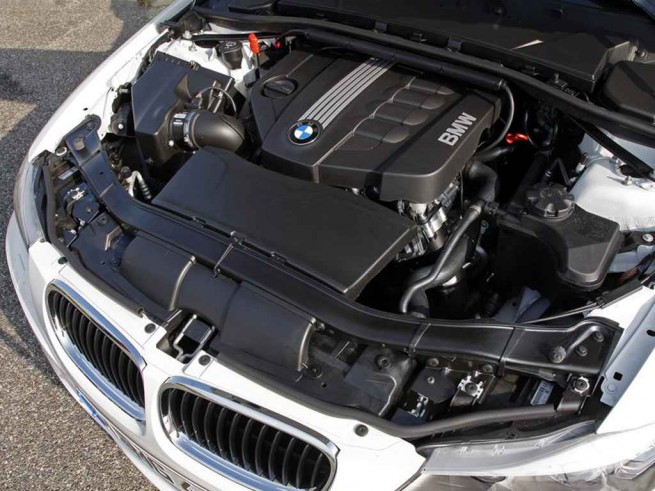
A similar concept was revealed years ago during the BMW Innovation Days, and at present the technology is being perfected. With the "predictive engine direction", the drivers enters a destination and the onboard computer calculates the road layout and driving conditions.
The computer might programme to recharge the bombardment during an extended downhill stretch when less of the engine's power is needed. On a high-speed road or highway, the new engine management system might increment the cooling ahead of the upcoming roads.
"We are actually excited nigh this," Baloga said for AutoNews. "The vehicle will know from the map what kinds of hills and highway stretches you will experience. Nosotros are very close to offering this in product."
Another technology mentioned in the past is a device that would capture waste heat from the exhaust system and farther catechumen it into electricity. The faster yous go and more oestrus is being prodigal, the faster the starter battery would get recharged.
Another trend to spotter: steer-by-wire, electronic steering that eliminates the mechanical link betwixt the steering cavalcade and the vehicle'southward wheels. Current versions of electric power steering maintain the mechanical link.
Balog said all of these new fuel saving technologies are costing the visitor around $ane.5 billion in R&D.
[Source: AutoNews ]
Source: https://www.bmwblog.com/2011/05/11/bmws-new-predictive-engine-management-technology/
0 Response to "BMW's new "Predictive Engine Management" technology"
Postar um comentário