Roast Beef Good Source of Protein
The best high-protein meat, seafood & eggs
- Protein per centum
- Video
- Poultry
- Cherry meat
- Deli & prepared meats
- Seafood
- Eggs
Meat, poultry, fish, shellfish, and eggs are loftier-protein foods that can help yous lose weight. Notwithstanding, some types are better than others. The fundamental? Maximizing satiety (feeling full and satisfied) per calorie when making food choices.
In this guide, we'll prove you how different types of meat, seafood, and eggs rate on the protein calibration — and which ones to choose most often because they help you feel full and provide maximum diet value. Plus, we'll share easy, tasty recipes based on these foods.
The image below shows the protein as a percentage of calories for different types of meat, seafood, and eggs.The higher the number, the more protein the food provides per calorie.
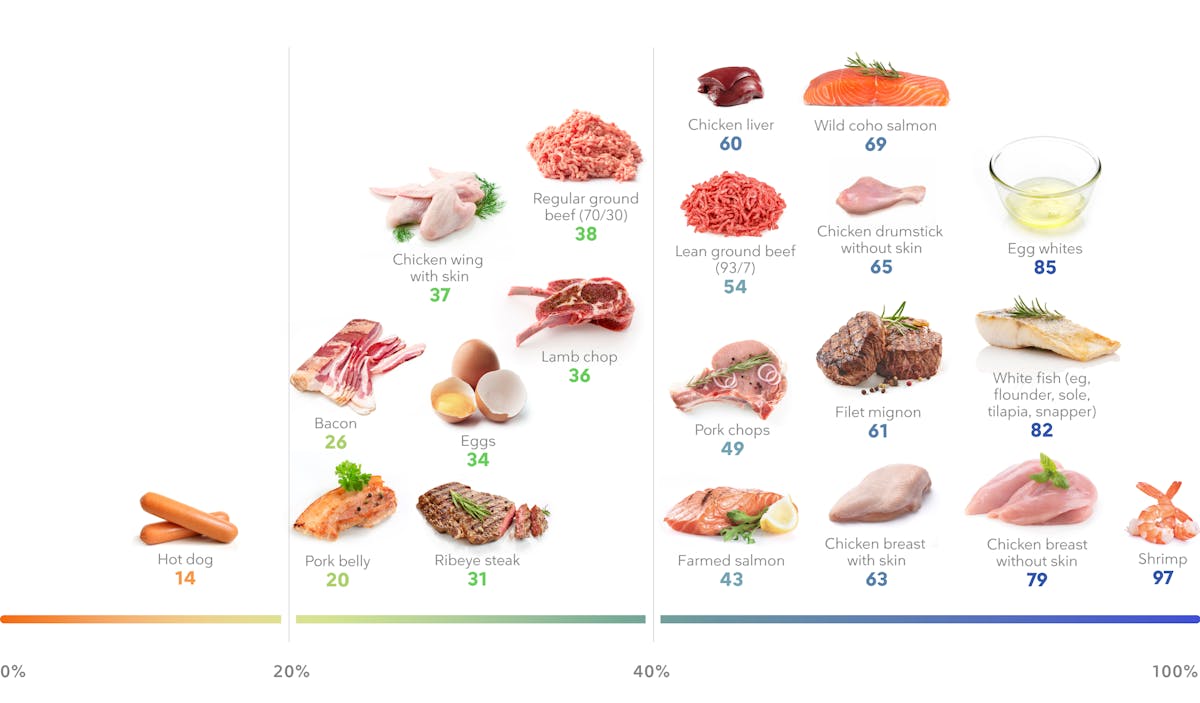
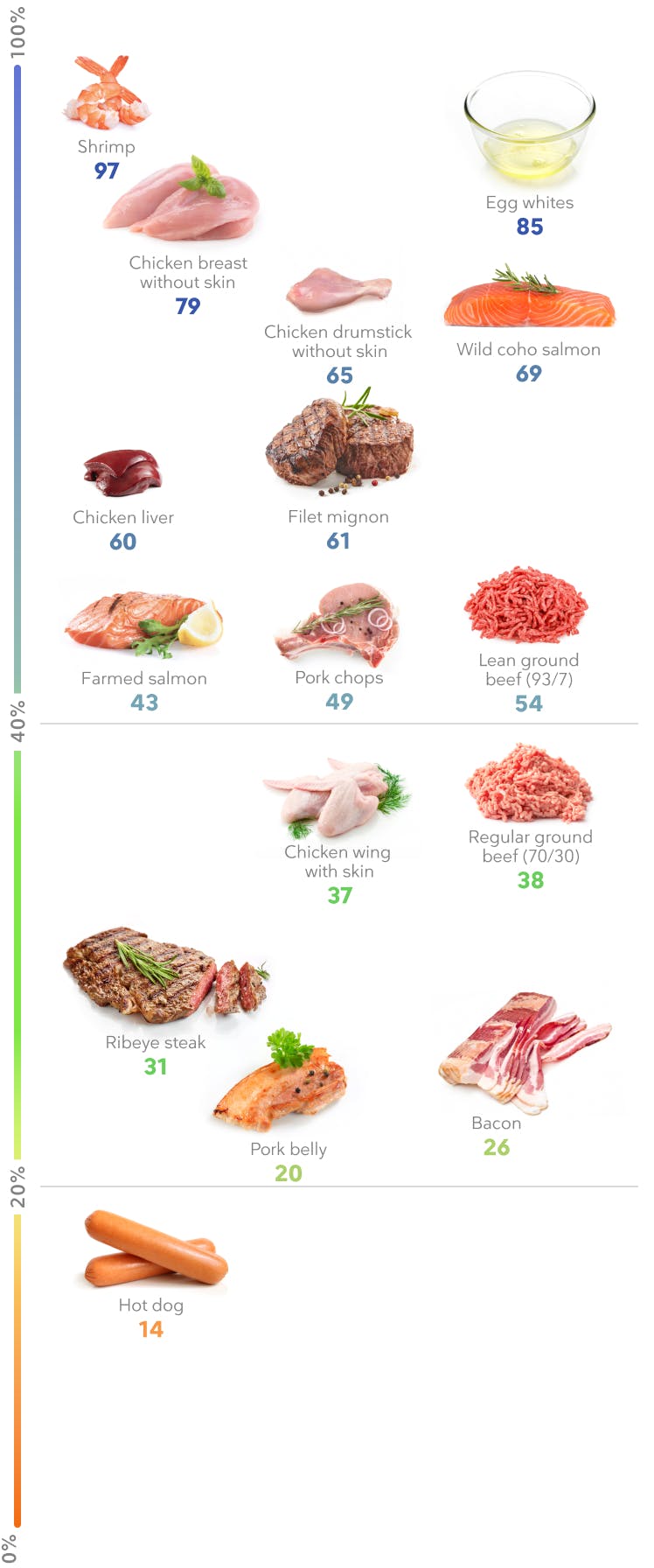
Key takeaways Aim for a high protein percentage. To lose weight, eat protein-rich foods. Most of the time, try to cull meat and seafood with at least 35% of calories from poly peptide. Learn more Best red meat and poultry. Consume fresh meats similar tenderloin, sirloin, lean ground meat, craven, and turkey oftentimes. Eat candy meat less frequently. Learn more Best fish and shellfish. Eat all types of fish, including salmon, trout, halibut, snapper, tuna, etc. Enjoy shrimp, crab, lobster, and nigh other shellfish, as well. Acquire more
More high-protein guides
More than high-protein guides
Or watch a summary of this guide in video:
Focus on poly peptide pct
Strong evidence shows that eating more protein, and less fats and carbs, can assistance you lose weight past reducing ambition and keeping your metabolism from slowing down.1
To lose weight without feeling hungry, select poly peptide-rich foods that provide the greatest satiety for the fewest calories.
How can you practise this? By choosing foods with a high "protein percentage." This per centum tells you how much of a nutrient's calories come up from protein as opposed to fats and carbs.
Nosotros believe selecting meat and seafood with protein percentages of 35% or more than nigh of the time tin can be very helpful for healthy weight loss. Generally speaking, leaner cuts of meat accept college protein percentages than fatty cuts do.
Additionally, aim to consume at least 100 grams of protein per day if you're a woman and 140 grams if you're a man of average superlative and build. Eat more if y'all're a human being taller than 6 anxiety (183 cm) or a woman taller than 5'6″ (168 cm) or if you lot're very physically agile. Eat less if y'all're shorter or have a petite frame.
Even so, don't feel that you lot need to meet all of your protein needs exclusively from the foods on this list. Dairy products, legumes, and vegetables can all contribute to your daily poly peptide intake.
In this guide, we provide both the protein percentages and gram amounts per serving for meat, seafood, and eggs.2 These are based on average values. The protein percentages and gram amounts can vary depending on the cut of meat, the creature's diet, the cooking method, and how much fatty is trimmed before eating.
Note: The protein gram amounts are for cooked portions. Meat and seafood lose near 25% of their weight in cooking. The poly peptide content of 4.5 ounces of raw meat or seafood is equivalent to nearly 3.5 ounces of cooked meat or seafood.
one. Poultry
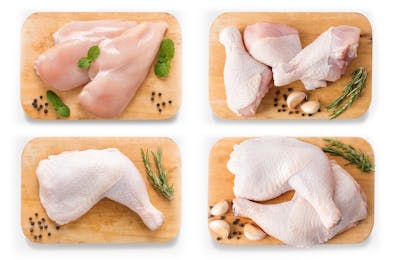 Chicken and turkey are high-satiety, protein foods that are corking for weight loss. Indeed, all types of poultry have excellent protein percentages! Nevertheless, leaner cuts (calorie-free meat) more often than not provide the virtually protein per calorie.
You'll also go a nice dose of vitamins and minerals with that poly peptide whether you cull light or dark meat.
The protein gram amounts reflect simply the edible portion, non the os. And so whether you cull bone-in or boneless chicken chest or thighs, you'll even so get the same amount of protein.
Can you consume chicken with the peel and notwithstanding lose weight? Yes. A slice of chicken with skin has a bit more than fat and therefore a slightly lower protein percentage than the same piece without skin. However, yous'll still get about the same grams of protein per serving.3
Below are the poly peptide percentages and grams of protein per three.five-ounce (100-gram) serving of cooked poultry (about the size of a deck of cards).
Chicken
- Chicken breast without skin:
Protein percentage: 79%
30 to 32 grams of protein per serving (approximately half of a large craven chest) - Chicken drumstick without pare:
Protein percent: 65%
26 to 28 grams of protein per serving (approximately two medium drumsticks) - Chicken chest with peel:
Protein pct: 63%
thirty to 32 grams of protein per serving (approximately half of a large chicken breast) - Craven liver:
Poly peptide per centum: lx%
25 to 27 grams of poly peptide and 1 gram of carbs per serving (limit liver to one serving per calendar week due to its high vitamin A content) - Chicken wing without skin:
Protein percentage: sixty%
xxx to 32 grams of poly peptide per serving (approximately five wings) - Chicken thigh without pare:
Protein pct: 55%
24 to 26 grams of protein per serving (approximately ane medium craven thigh) - Craven drumstick with skin:
Protein percentage: 52%
26 to 28 grams of poly peptide per serving (approximately 2 medium drumsticks) - Ground chicken:
Protein percentage: 49%
22 to 24 grams of protein per serving - Chicken thigh with skin:
Protein pct: 43%
24 to 26 grams of poly peptide per serving (approximately ane medium chicken thigh) - Chicken wing with skin:
Poly peptide per centum: 37%
22 to 24 grams of protein per serving (approximately 3 wings)
Turkey
- Turkey breast without skin:
Poly peptide percentage: 85%
xxx to 32 grams of protein per serving - Turkey drumstick without skin:
Protein percentage: 67%
28 to 30 grams of poly peptide per serving - Turkey breast with pare:
Poly peptide per centum: 66%
30 to 32 grams of protein per serving - Turkey drumstick with skin:
Protein per centum: 57%
28 to thirty grams of protein per serving - Ground turkey (lean):
Protein percentage: 50%
25 to 27 grams of poly peptide per serving - Footing turkey (regular):
Protein percent: 42%
25 to 27 grams of protein per serving
High-protein poultry recipes
2. Cerise meat
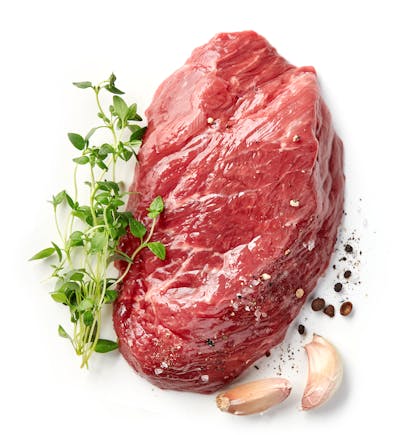 Ruby-red meat is an excellent poly peptide-rich nutrient that provides several vitamins and minerals, including atomic number 26, potassium, and zinc. Simply not all types are equal when it comes to protein. Fatty meats provide less protein per calorie than lean types and therefore take lower protein percentages.
For instance, 3.five ounces (100 grams) of lean beef steak contains little fatty, so its protein percentage is very loftier at 70%. By comparison, 3.5 ounces of beef brisket has about the aforementioned grams of protein as iii.v ounces of lean steak, just more fat (and calories).
Beef brisket's protein per centum is 40% considering it provides much less protein per calorie than lean steak.
Choosing meats with protein percentages above 35% may help you lose weight about effectively. Nonetheless, food enjoyment and variety are of import, besides! So feel free to eat your favorite meats that take lower protein percentages sometimes.
Here are the poly peptide percentages and grams of protein per iii.v-ounce (100-gram) serving of cooked red meat (nearly the size of a deck of cards).
Beefiness
- Heart of circular steak:
Protein percent: 70%
28 to 30 grams of protein per serving - Superlative sirloin steak:
Poly peptide percentage: 69%
28 to 30 grams of protein per serving - Liver:
Poly peptide percentage: 62%
27 to 29 grams of protein and four grams of carbs per serving (limit liver to one serving per calendar week due to its high vitamin A content) - Filet mignon (beefiness tenderloin):
Protein per centum: 61%
28 to 30 grams of protein per serving - Ground beefiness, lean (93% lean/7% fatty):
Protein per centum: 54%
25 to 27 grams of poly peptide per serving
- Ground beef, regular (85/fifteen):
Protein percent: 42%
24 to 26 grams of protein per serving - Brisket:
Poly peptide percentage: 40%
27 to 29 grams of protein per serving - Ground beef, regular (70/30):
Protein percent: 38%
24 to 26 grams of protein per serving - Ribeye steak:
Poly peptide per centum: 31%
xx to 24 grams of protein per serving - Prime rib:
Protein percentage: 30%
20 to 24 grams of protein per serving
Ground beef classifications like actress-lean, lean, etc., are defined past laws prepare past the USDA. They are based on the percentage of lean and fat a meat contains past weight (which includes water) rather than the percentage of protein and fat that contribute to calories. You will often see 93/seven (lean), 85/xv, and similar numbers on meat packages. Don't let those values confuse you! Simply focus on the protein percentages for different ground meats in this guide.What do these fractions mean?
Pork
- Pork tenderloin:
Protein percentage: 71%
26 to 28 grams of protein per serving - Footing pork, extra-lean (94% lean/6% fat):
Protein pct: 64%
28 to xxx grams of poly peptide per serving - Pork chops:
Protein percentage: 49%
26 to 28 grams of protein per serving - Pork roast:
Protein percent: 47%
26 to 28 grams of protein per serving - Ground pork, regular (85/15):
Poly peptide percentage: 36%
26 to 28 grams of protein per serving - Pork shoulder:
Poly peptide percentage: 34%
22 to 24 grams of protein per serving - Ground pork, regular (72/28):
Protein percentage: 25%
22 to 24 grams of poly peptide per serving - Pork ribs:
Poly peptide percentage: 23%
19 to 22 grams of protein per serving (three medium ribs) - Pork belly:
Poly peptide percentage: 20%
15 to 18 grams of protein per serving
Lamb
- Lamb tenderloin:
Protein pct: 67%
30 to 32 grams of protein per serving - Leg of lamb:
Protein percentage: l%
26 to 28 grams of poly peptide per serving - Lamb shank:
Protein percentage: 47%
28 to 30 grams of protein per serving - Lamb chops or rack of lamb:
Poly peptide percentage: 36%
27 to 29 grams of protein per serving (approximately two to three lamb chops) - Ground lamb:
Protein percentage: 36%
24 to 26 grams of protein per serving
Bison
- Height round or ribeye steak:
Protein per centum: 70%
29 to 31 grams of protein per serving - Ground bison:
Protein percentage: 59%
25 to 27 grams of poly peptide per serving
Veal
- Sirloin:
Protein percentage: 59%
25 to 27 grams of protein per serving - Ground veal:
Protein percentage: 56%
23 to 25 grams of protein per serving - Rib:
Protein percent: 42%
23 to 25 grams of protein per serving
High-protein scarlet meat recipes
3. Deli and prepared meats
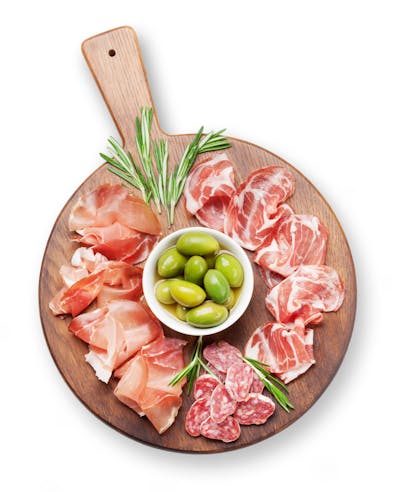 Processed meats — meats that have been cured, smoked, or dried — are often considered less salubrious than their fresh counterparts.
Although claims that they may lead to health bug are based on very weak observational evidence, processed meats more often than not contain less protein than fresh meat.fourTherefore, well-nigh of them are non platonic for losing weight.
The skilful news is, some processed meats practice have high protein percentages. Bask these regularly, and save some of the other types for when y'all want to occasionally indulge.
Here are the protein percentages and grams of protein per 3.5-ounce (100-gram) serving of deli and prepared meats (nearly the size of a deck of cards, unless otherwise noted).v
- Canadian bacon (actress-lean ham):
Poly peptide percentage: 77%
27 to 29 grams of protein per serving - Lean turkey, chicken, roast beef, or ham cafeteria meat:
Protein percentage: 60 to 80% (Extra-lean meat without added carbohydrate or fillers may have protein percentages as high equally fourscore%)
15 to 20 grams of protein per serving - Pastrami:
Protein pct: sixty%
20 to 24 grams of protein per serving (Read the characterization to detect the number of slices per serving) - Prosciutto:
Protein percentage: 54%
20 to 24 grams of protein per serving (Read the label to observe the number of slices per serving) - Chicken or turkey sausage:
Protein pct: 46%
18 to 20 grams of poly peptide per serving (approximately four to half-dozen medium links) - Turkey salary:
Protein percentage: 45%
38 to 42 grams of protein per 3.5 ounces /100 grams (approximately viii slices)
xix to 21 grams of protein per serving (approximately four slices) - Corned beef:
Protein percentage: 43%
25 to 28 grams of protein per serving - Bacon:
Protein per centum: 26%
33 to 37 grams of protein per three.5 ounces/100 grams (approximately 12 slices)
11 to 12 grams of poly peptide per serving (approximately 4 slices) - Pork sausage:
Protein per centum: 22%
fifteen to 18 grams of protein (approximately four to vi medium links) - Salami:
Protein percentage: 22%
18 to 22 grams of protein per 3.5 ounces/100 grams (approximately ten medium slices)
ix to eleven grams of protein per serving (approximately five slices) - Liverwurst:
Protein percentage: 17%
xiv to 16 grams of poly peptide (approximately one-one-half loving cup) - Hot canis familiaris:
Protein percentage: 14%
10 to 12 grams of protein (approximately ii medium-sized hot dogs)
4. Seafood
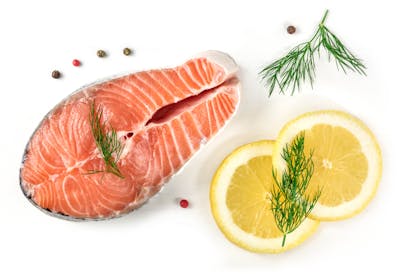 Seafood has a well-deserved reputation for existence 1 of the best weight loss foods. Considering fish and shellfish are high in poly peptide yet low in fat and carbs, nearly all types have impressive protein percentages.
Make seafood choices based on your preferences and what is available. Canned fish and shellfish are convenient, less expensive options.
Enjoy seafood several times a calendar week, if you like. However, avert or limit types of fish that are loftier in mercury, specially larger fish like bigeye tuna, Male monarch mackerel, swordfish, and shark.
Fish
Besides packing plenty of protein, fish are rich in vitamin B2 (riboflavin), potassium, and selenium, amidst other nutrients. While fatty fish similar salmon and sardines have slightly lower protein percentages than lean fish, they provide higher amounts of essential omega-iii fatty acids.
Here are the protein percentages and grams of poly peptide per 3.5-ounce (100-gram) serving of cooked fish (about the size of a deck of cards), unless otherwise noted.
- White fish (such as flounder, sole, halibut, pollack, snapper, and tilapia):
Poly peptide percentage: 82%
23 to 27 grams of protein per serving - Sea bass:
Protein percent: 77%
24 to 26 grams of protein per serving - Canned tuna (low-cal or albacore):
Protein percent: 75%
23 to 25 grams of protein per serving (Limit to once a week due to its loftier mercury content) - Canned pink salmon*:
Protein per centum: 73%
24 to 26 grams of protein per serving - Wild salmon (Coho):
Protein percentage: 69%
23 to 25 grams of protein per serving - Raw tuna (sashimi):
Protein percentage: 64%
22 to 24 grams of protein per serving (Limit tuna to once a week due to its high mercury content) - Anchovies:
Protein percentage: 62%
24 to 26 grams of protein per serving - Trout:
Protein percentage: 57%
26 to 28 grams of protein per serving - Raw salmon (Atlantic):
Protein percentage: 56%
19 to 21 grams of protein per serving - Farmed salmon (Coho):
Protein percentage: 54%
23 to 25 grams of protein per serving - Herring:
Poly peptide per centum: 46%
23 to 25 grams of protein per serving - Sardines:
Protein percentage: 45%
23 to 25 grams of poly peptide per serving - Farmed salmon (Atlantic):
Poly peptide per centum: 43%
21 to 23 grams of poly peptide per serving - Mackerel:
Protein percentage: 38%
23 to 25 grams of protein per serving
*Annotation: Different species of salmon have different fatty contents and therefore higher or lower protein percentages.
Shellfish
All shellfish are high in poly peptide and depression in fat. However, some comprise a few carbs, which lowers their poly peptide percent. Shellfish are likewise a great source of vitamin B12, magnesium, and iodine.
Here are the protein percentages and grams of protein per 3.5-ounce (100-gram) serving of cooked shellfish, unless otherwise noted.
- Shrimp and prawns:
Protein percentage: 97%
23 to 25 grams of protein per serving (x to 12 medium shrimp or prawns) - Crab:
Poly peptide percentage: 87%
xviii to 20 grams of protein per serving (approximately ane average crab leg or one cup of cooked crab) - Lobster:
Protein per centum: 85%
20 to 22 grams of protein per serving (approximately one small lobster tail or two-thirds of a cup of cooked lobster) - Scallops:
Protein pct: 76%
18 to 20 grams of poly peptide and 4 to 5 grams of carbs per serving (6 large body of water scallops) - Octopus:
Poly peptide percentage: 73%
26 to 28 grams of protein and 4 to five grams of carbs per serving (approximately one-half cup) - Clams:
Protein percentage: 70%
24 to 26 grams of poly peptide and 5 grams of carbs per serving (approximately 10 small clams) - Squid:
Protein percentage: 69%
17 to 19 grams of protein and iii grams of carbs per serving (approximately 1-half cup) - Mussels:
Poly peptide percentage: 56%
24 grams of protein and 7 grams of carbs per serving (approximately twenty to 25 medium mussels) - Oysters (raw):
Protein percent: 49%
5 to 10 grams of protein and 5 to 6 grams carbs per serving (approximately iv to eight medium oysters, depending on the type) 6 - Oysters (cooked):
Protein per centum: 47%
12 to 19 grams of protein and 6 to 8 grams of carbs per serving (approximately 10 to 12 medium oysters, depending on the blazon) seven
High-poly peptide fish and shellfish recipes
v. Eggs
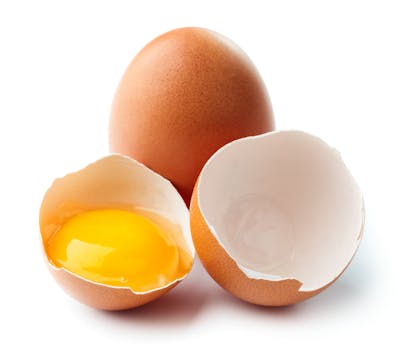 Eggs are versatile, loftier in protein, and weight loss-friendly.
Egg whites provide more protein per calorie than egg yolks. However, the yolks contain more essential nutrients, such as vitamin A and selenium, than egg whites. Whole eggs are more nutritious overall and sense of taste better than egg whites.
We recommend that you mainly eat whole eggs, merely experience free to also include some egg whites if you find information technology difficult to come across your protein targets.
Here are the protein percentages and grams of protein per 3.5-ounce (100-gram) serving of eggs:
- Egg whites:
Protein percent: 85%
11 grams of protein per serving (three big egg whites) - Whole eggs:
Protein percentage: 34%
12 grams of protein per serving (two large eggs) - Egg yolks:
Protein pct: xx%
16 grams of protein per serving (half dozen large egg yolks)
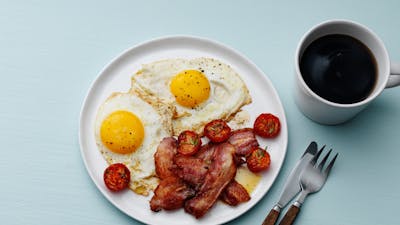
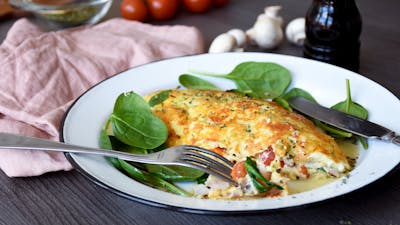
High-protein egg recipes
Learn more well-nigh poly peptide
-
MEMBERS ONLY

-

-

-
MEMBERS ONLY

-
MEMBERS ONLY

The best high-poly peptide meat, seafood & eggs - the evidence
This guide is written by Franziska Spritzler, RD and was last updated on June 3, 2022. It was medically reviewed by Dr. Bret Scher, MD on May 14, 2021.
The guide contains scientific references. You lot can observe these in the notes throughout the text, and click the links to read the peer-reviewed scientific papers. When appropriate we include a grading of the strength of the prove, with a link to our policy on this. Our evidence-based guides are updated at least once per year to reflect and reference the latest science on the topic.
All our evidence-based health guides are written or reviewed by medical doctors who are experts on the topic. To stay unbiased nosotros show no ads, sell no physical products, and take no money from the industry. We're fully funded by the people, via an optional membership. Nigh information at Nutrition Dr. is gratis forever.
Read more most our policies and piece of work with evidence-based guides, nutritional controversies, our editorial team, and our medical review board.
Should you find any inaccuracy in this guide, please email andreas@dietdoctor.com.
Source: https://www.dietdoctor.com/high-protein/meat-seafood-eggs
0 Response to "Roast Beef Good Source of Protein"
Postar um comentário